Source Portable Trailer Mounted Concrete Pump for Building Sites
Compare 30 portable trailer mounted concrete pump options for construction projects. Evaluate specifications like hydraulic processes, diesel power, and conveying distances to find the right stationary or mobile solution for your building needs; compare the available evidence and request quotations based on your requirements.
Key considerations
Products List

$18000.00 - $35000.00
Moq: 1


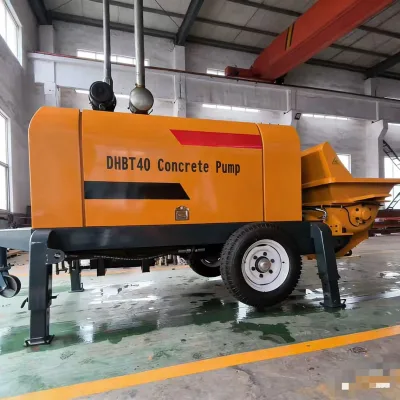


Mobile Portable Concrete Line Pump Concrete Mixer Pump Concrete Pump Trailer
$16000.00 - $27000.00
Moq: 1
Comprehensive Sourcing Guide
Portable Trailer Mounted Concrete Pump Sourcing Guide
Buyers evaluating portable trailer mounted concrete pumps must first distinguish between stationary and mobile configurations based on site mobility requirements. The observed market data indicates a clear split between fixed station models and trailer-mounted units designed for relocation, with specific listings highlighting "trailer pump" models and varying dimensions that suggest different transport capabilities. Understanding whether a unit is a stationary type or a true mobile solution is the primary decision point, as this dictates the necessary chassis configuration and transport logistics for your specific project.
Procurement teams should also scrutinize the power source and output capacity to ensure alignment with project scale. Listings reveal a mix of diesel-powered units and electric models, with concrete output ranging significantly from 1 to 98 cubic meters per hour. Selecting the correct power type and capacity is critical, as a mismatch can lead to operational bottlenecks or unnecessary fuel costs. Buyers must verify that the selected unit's maximum vertical and horizontal conveying distances match the specific topography and layout of the construction site to avoid logistical failures during the pour.
Product Scope and Observed Listing Signals
The product scope for these units encompasses a wide range of specifications, including varying hopper capacities and aggregate size limits that directly impact material compatibility. Observed listings show hopper capacities ranging from 600 to 700 liters and maximum aggregate sizes specified as less than 40mm or exactly 40mm. Buyers must carefully cross-reference these physical constraints with their specific concrete mix designs to ensure the pump can handle the aggregate without clogging, as exceeding these limits can cause immediate mechanical failure and project delays.
Marketing signals often highlight unique selling points such as high operating efficiency or high-power engines, which serve as indicators of performance potential. However, these claims require validation against actual test reports and dimensional data provided in the listing. For instance, while some units advertise high efficiency, others emphasize engine power, suggesting different operational priorities. Procurement specialists should treat these marketing attributes as observations rather than guaranteed performance metrics, verifying them through the provided machinery test reports before finalizing a purchase decision.
Technical Specifications to Verify
Technical verification must begin with the structural design and machining processes used to construct the pump. The observed data points to a cylinder type structure and hydraulic machining processes, which are standard for reliable concrete pumping but require confirmation of the specific hydraulic system integrity. Buyers should request detailed schematics or inspection reports to ensure the hydraulic components are robust enough to handle the high pressures associated with vertical conveying distances up to 200 meters, as structural weaknesses in this area can lead to catastrophic system failures.
Dimensional and weight specifications are equally critical for site planning and transport logistics. Listings indicate dimensions ranging from 4000x2150x2200mm to 8500x2300x3300mm, with weights varying between 5000 and 6800 kilograms. These figures directly influence the type of trailer required for transport and the space needed for setup on-site. Buyers must verify that the specific unit's dimensions and weight align with their site access constraints and transport regulations, ensuring that the equipment can be safely moved and positioned without requiring specialized heavy-lift infrastructure.
Compliance and Safety Documentation
Compliance verification is essential to ensure that the equipment meets international safety and quality standards before deployment. The observed listings frequently cite ISO9001 and CE certifications, which are critical indicators of manufacturing quality and regulatory adherence. Buyers should explicitly request copies of these certificates and verify their validity with the issuing bodies, as these documents confirm that the pump has undergone rigorous quality control processes and meets the necessary safety requirements for operation in various jurisdictions.
Safety documentation must also include comprehensive machinery test reports and warranty details for core components. The presence of provided test reports is a strong signal of transparency, allowing buyers to review actual performance data regarding pressure, flow rates, and structural integrity. Additionally, the warranty period for core components, observed as one year in some listings, defines the scope of manufacturer liability. Buyers should ensure that the warranty terms clearly cover critical hydraulic and mechanical parts to mitigate financial risk in the event of premature failure during the construction phase.
Cost Drivers and Commercial Terms
Cost drivers for portable trailer mounted concrete pumps are heavily influenced by power type, output capacity, and specific customization options. The market data shows a price range from approximately 1,299 to nearly 60,000 USD, reflecting the vast differences between basic electric models and high-output diesel units. Buyers must analyze the total cost of ownership, considering that higher output capacities and diesel engines typically command premium prices but offer greater versatility for large-scale projects, whereas electric models may offer lower operational costs in specific environments.
Commercial terms regarding packaging and delivery are equally important for managing logistics and protecting the equipment during transit. Listings indicate "nude packing" with anti-rain cloths, which suggests minimal protective packaging that requires careful handling and immediate on-site protection. Buyers should negotiate clear terms regarding the condition of the equipment upon arrival and the responsibility for any damage incurred during shipping. Furthermore, understanding the lead time and delivery specifics is crucial for aligning the equipment arrival with the project schedule to avoid costly downtime.
Supplier Qualification and Quality Control
Supplier qualification should focus on the availability of after-sales support and the transparency of the manufacturing origin. The observed listings highlight video technical support as a key service, which is vital for troubleshooting issues remotely without the need for immediate on-site visits. Buyers should verify the responsiveness and technical capability of the support team, ensuring they can provide timely assistance to minimize project interruptions. Additionally, confirming the origin, such as Hunan, China, helps in understanding the supply chain dynamics and potential logistical challenges associated with international shipping.
Quality control processes must be validated through the supplier's adherence to production standards and the provision of test documentation. The presence of ISO9001 certification suggests a structured quality management system, but buyers should also request evidence of in-house testing procedures for the specific models they intend to purchase. Ensuring that the supplier conducts rigorous checks on the hydraulic systems, structural integrity, and engine performance is essential. This due diligence helps confirm that the equipment will perform reliably under the demanding conditions typical of construction projects.
Long-Term Procurement Checks
Long-term procurement checks should prioritize the availability of spare parts and the durability of core components over the initial purchase price. The one-year warranty on core components is a baseline expectation, but buyers should investigate the supplier's track record for providing replacement parts beyond this period. Ensuring a steady supply of critical components like hydraulic seals, pumps, and engine parts is essential for maintaining operational continuity and extending the lifespan of the equipment throughout its service life.
Maintenance and operational efficiency are key factors in the long-term value of the concrete pump. Buyers should assess the ease of maintenance and the availability of technical documentation to ensure that the equipment can be serviced efficiently by local teams. The observed productivity rates, such as 50 cubic meters per hour, should be maintained over time, and buyers must verify that the design allows for easy access to critical components for routine servicing. This proactive approach to maintenance planning helps prevent unexpected breakdowns and ensures the equipment remains a productive asset for the duration of the project.
FAQs
What is the concrete output capacity of the stationary pump?
The stationary concrete pump offers a maximum output of 98 cubic meters per hour. This high productivity rate ensures efficient large-scale construction projects. The unit is designed for continuous operation with a hydraulic process that maintains consistent flow. It supports vertical conveying distances up to 200 meters and horizontal distances up to 1500 meters for versatile site placement.
Can the concrete pump be customized for specific project needs?
Yes, customization is available for this concrete pump to meet specific operational requirements. Buyers can request modifications to suit particular site conditions or material specifications. The product supports wet shotcrete types and allows for tailored configurations. This flexibility ensures the equipment integrates seamlessly into diverse building projects while maintaining high operating efficiency and performance standards.
What certifications does the concrete pump hold for safety?
The concrete pump holds ISO9001 and CE certifications, ensuring compliance with international quality and safety standards. These certifications verify that the manufacturing process meets rigorous quality control requirements. The equipment is supplied in new condition with provided machinery test reports. This documentation supports regulatory compliance and provides buyers with confidence in the product's reliability and operational safety for construction applications.
What is the warranty coverage for core components?
The warranty for core components is provided for one year. This coverage protects buyers against defects in key mechanical parts during the initial operational period. The warranty applies to the new condition equipment supplied from Hunan, China. Buyers receive video technical support for troubleshooting, ensuring minimal downtime. This support structure helps maintain long-term reliability and operational continuity for construction projects utilizing the stationary pump.
How is the concrete pump packed for shipping?
The concrete pump is packed in nude packing with an anti-rain cloth to protect against weather damage during transit. This packaging method ensures the equipment remains secure while allowing for easy inspection upon arrival. The dimensions vary by model, with some units measuring 8500 by 2300 by 3300 millimeters. This robust packing strategy safeguards the machinery during international shipping while maintaining the integrity of the hydraulic and structural components.